Storm season rarely cancels a business trip in Northeast Florida. It relocates it.
The aircraft repositions a day early. The arrival moves from Jacksonville International to Craig, or Cecil, because that’s where the hangar space is. A commercial segment vanishes on a clear Tuesday morning because the airframe never made it out of Tampa. The crew times out at 11 p.m. and the principal lands somewhere nobody planned for.
The meeting doesn’t move. The closing doesn’t move. The Mayo appointment doesn’t move.
That gap — between a trip that’s been rearranged and a calendar that hasn’t — is where September and October go wrong here. And the piece that fails most often is the one nobody assigned an owner to: the car that’s supposed to be waiting when the door opens at an airport that wasn’t on the itinerary this morning.
This guide covers both sides of it. What happens to commercial itineraries into JAX, what happens to private aircraft across the region’s five fields, and what a ground operation has to do to absorb the difference. Written for executive assistants, flight departments, charter brokers, and principals who travel here through storm season.
Key Takeaways
- Florida’s practical hurricane evacuation window runs 36 to 60 hours, based on a review of 22 years of storm data (CNN, August 2026). Flight plans, hangar space, and ground logistics all get rewritten inside it.
- JAX almost never closes. It stayed open through both Helene and Milton while flights cancelled around it — disruption arrives through the airline network, not the local weather.
- Northeast Florida has seven FBOs across five airports. A field change is a schedule change: Amelia Island is 15 minutes from Fernandina but 35 from JAX.
- Private departures usually move earlier, not later. Principals planning to leave “before it gets bad” often find the aircraft already gone.
- Book ground transport against the tail number or flight number, never a clock time and an airport code.
How Storm Season Actually Disrupts Travel Here
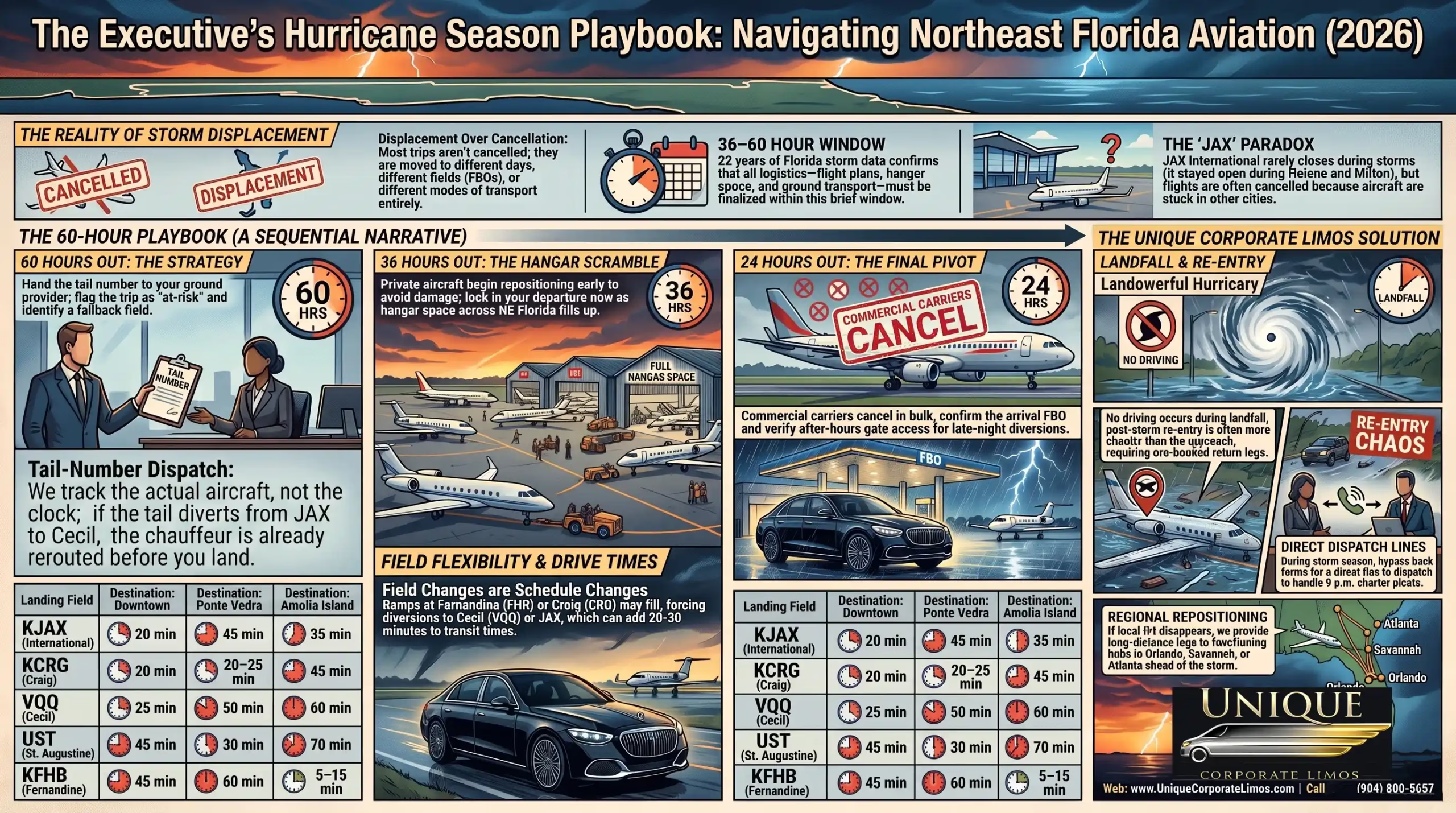
Everything compresses into roughly a day and a half. In 2026, PriorityEvac’s founder told CNN that a review of 22 years of Florida hurricane data put the typical evacuation window at 36 to 60 hours (CNN, August 2026). Inside that window, commercial carriers pre-cancel, private operators reposition aircraft, hangars fill, crews get restaged, and every travel decision in the region competes for the same shrinking supply.
Decisions made in the first half of that window hold. Decisions made in the last few hours usually don’t. That’s the most useful thing to know about storm season logistics here, and it applies whether you’re flying commercial, chartering, or moving a household.
A timeline running from 60 hours before landfall to landfall, showing that aircraft repositioning and hangar allocation happen between 60 and 36 hours out, commercial rebooking closes around 24 hours out, and ground operations suspend at landfall.
DECISION WINDOW BEFORE LANDFALL
60–36h · Aircraft reposition, hangar space committed. Decisions here hold.
36–24h · Commercial seats thin. Road legs still viable.
24h–landfall · Options close. Ground operations suspend; nobody is driving.
The word that matters is displacement, not cancellation. Very few trips into Northeast Florida simply evaporate. Most get moved — to a different day, a different field, a different city, or a different mode entirely.
Is JAX Open During a Hurricane?
Usually, yes, and that’s what catches people out. During Hurricane Helene in September 2024, Jacksonville International Airport remained open while flights were cancelled and delayed. The same pattern held during Hurricane Milton, when the airport stayed operational and directed travelers to check status directly with their airline.
Jacksonville sits at the bend of the Florida coast, which historically steers storms north or south. Full closures are rare here. What isn’t rare is a morning where the terminal is lit, the roads are clear, and half the departure board reads CANCELLED.
Here’s the mechanism. A storm parks over the Gulf. Airlines pre-cancel at Tampa, Orlando, and New Orleans to protect crews and aircraft. Those airframes and crews are now out of position across the entire network. Two days later a Newark-to-Jacksonville segment disappears on a clear Jacksonville morning, because the aircraft assigned to it is still sitting somewhere else.
The commercial playbook is deliberate. Ahead of Hurricane Irma, JetBlue staged aircraft and crews at focus cities well outside the storm path specifically so it could resume flying once airports cleared. Sound operational practice — and it means recovery is sequenced around the airline’s network, not around your Thursday.
The point most storm guides miss: your Jacksonville arrival is far more likely to be disrupted by a storm hitting somewhere else than by a storm hitting Jacksonville.
There’s a non-weather version of the same failure, worth knowing because the consequence is identical. When a fire in the JAX hourly parking garage forced a full shutdown in 2026, inbound traffic was halted and flights were diverted to Orlando until the airport reopened. Different cause, same outcome: you land 140 miles from your ground transportation.
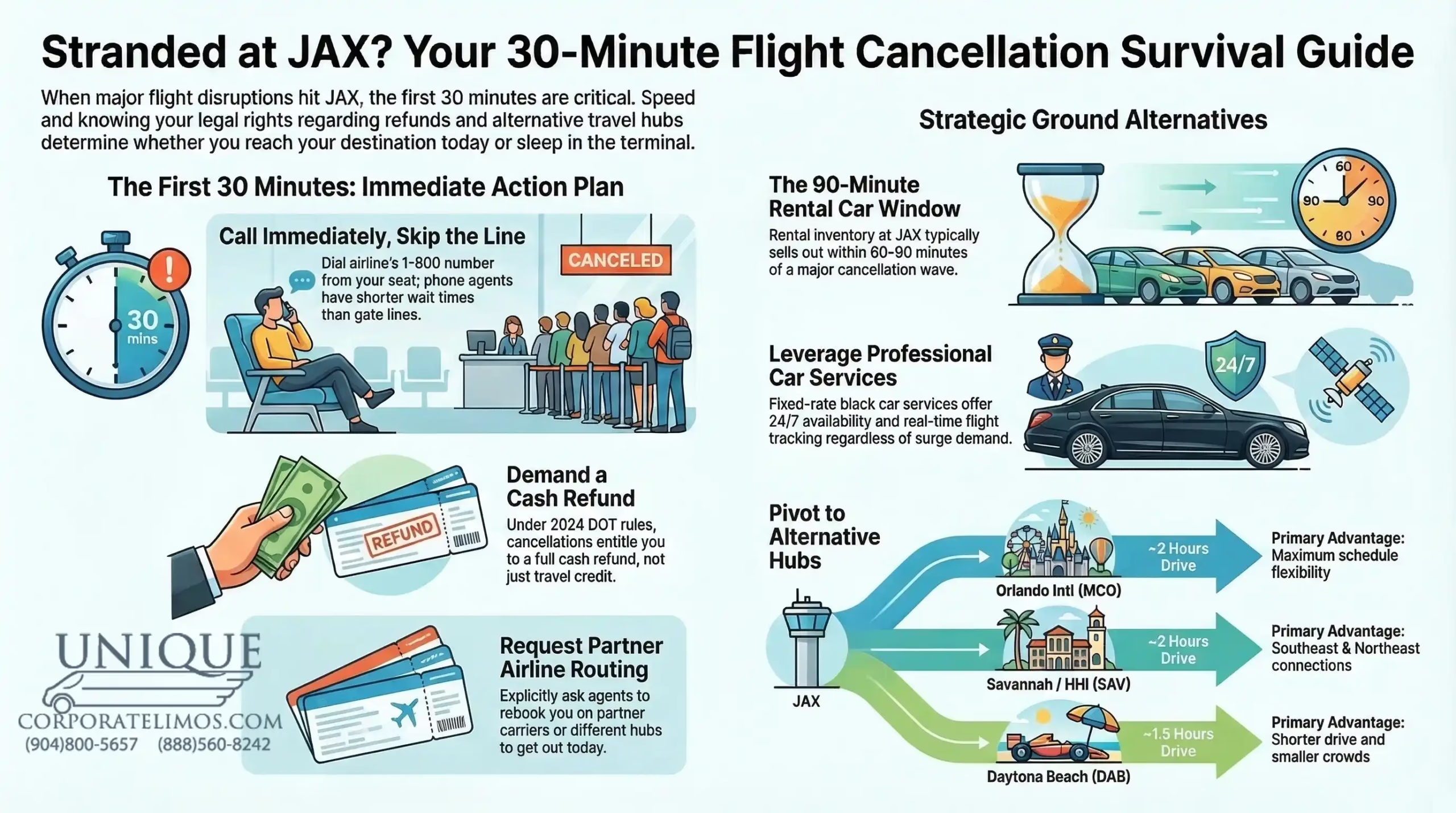
Our companion guide covers the in-terminal response in detail — what to do when your flight is delayed or cancelled at JAX.
The 2026 Season Outlook, and Why “Below Normal” Misleads
NOAA’s August 2026 update forecast 7 to 13 named storms, of which 2 to 6 could become hurricanes, including 0 to 2 major hurricanes, with a 75% probability of below-normal activity. Forecasters attribute the quiet outlook to El Niño conditions that emerged in the equatorial Pacific in June, which increase wind shear and suppress storm formation.
Encouraging odds. Now read the range again. A forecast that tops out at six hurricanes describes a season perfectly capable of closing resorts, grounding regional lift, and erasing a week of flights.
Seasonal outlooks tell you about the basin. They tell you nothing about your Tuesday. The peak for Duval County runs from mid-August through late October, and that window is open right now regardless of what the season total ends up being.
Plan September and October travel as though one system will touch your itinerary. Being wrong in that direction costs a flexible fare and a confirmed car. Being wrong the other way costs considerably more.
What Happens to Private Aircraft When a Storm Enters the Cone
Aircraft relocation is the first domino, and it falls fast. As Air Charter Advisors notes in its hurricane season guidance, owners preparing for a storm compete directly with airlines, flight schools, and other operators moving their fleets, which makes timing the binding constraint.
Hangar space across Northeast Florida is finite in a normal week. Under a threat cone it’s committed within hours. The risk driving that scramble is straightforward: floodwaters reaching hangars can damage avionics, interiors, and engines on aircraft left in place.
What this means for a principal: your departure is likely to move earlier, not later. The plan to leave “before it gets bad” frequently collides with an aircraft that repositioned yesterday.
The second-order effect catches even experienced travelers. Once an aircraft leaves the region, the return leg isn’t necessarily coming back to where it departed. Ramp availability and crew positioning decide the arrival field, and that decision often gets made in the last few hours before the leg.
Which brings us to the part that actually costs time on the ground.
Why the Field on Your Itinerary May Not Be the Field You Land At
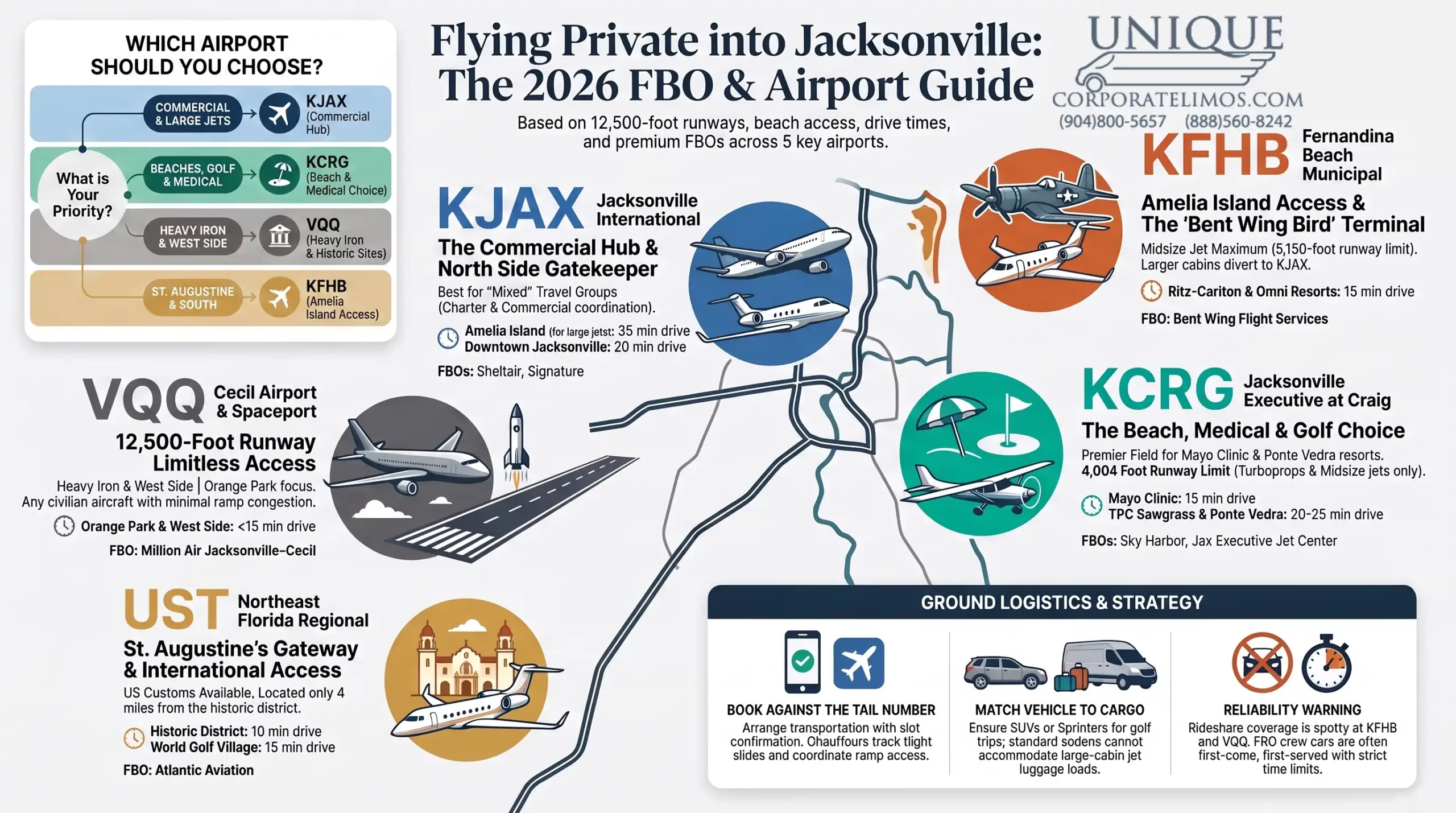
Northeast Florida runs private aviation through seven FBOs across five airports: Sheltair and Signature at KJAX, Sky Harbor Aviation and Jax Executive Jet Center at KCRG, Million Air at Cecil (VQQ), Atlantic Aviation at Northeast Florida Regional (UST), and Bent Wing Flight Services at Fernandina Beach (KFHB).
These fields are not interchangeable, and during storm season the choice often isn’t yours. Runway length narrows the options quickly. KFHB tops out around 5,150 feet, so large-cabin aircraft can’t use it. KCRG’s longer runway runs 4,004 feet, sending heavier iron to KJAX or Cecil. Cecil itself has a 12,500-foot runway plus three more at 8,000 feet and can accept any civilian aircraft flying — which makes VQQ the region’s natural overflow field when ramps elsewhere fill up.
Now the part that hits the schedule. Here are our published drive times from each field:
| Field | Published drive times |
|---|---|
| KJAX Jacksonville International |
Downtown ~20 min · Amelia Island ~35 min · Ponte Vedra ~45 min · Sea Island, GA ~75 min |
| KCRG Executive at Craig |
Downtown ~20 min · Jacksonville Beach ~15 min · Mayo Clinic ~15 min · TPC Sawgrass / Ponte Vedra ~20–25 min |
| VQQ Cecil Airport & Spaceport |
Downtown ~25 min · Orange Park ~20 min · Gainesville ~75 min |
| UST Northeast Florida Regional |
Downtown St. Augustine ~10 min · Nocatee ~25 min · Ponte Vedra ~30 min · Palm Coast ~35 min |
| KFHB Fernandina Beach Municipal |
Downtown Fernandina ~5 min · Ritz-Carlton Amelia Island ~15 min · Omni Amelia Island ~15 min |
Amelia Island is about 15 minutes from Fernandina Beach but about 35 minutes from Jacksonville International. Ponte Vedra is about 20 to 25 minutes from Craig but about 45 minutes from Jacksonville International.
Look at what a field change does. Neither reroute is dramatic on paper. Both quietly add half an hour to an itinerary that was built without it — and nobody briefs the principal on that. They just arrive late.
The full field-by-field breakdown, including which FBO operates where and the UST/KSGJ identifier quirk, is in our Jacksonville FBO guide. Ramp-side service across all seven FBOs is covered on our private jet and FBO car service page.
The operational answer is easy to state and harder to execute. The ground provider needs the tail number, not the airport code. Track the aircraft and a field change becomes a re-route. Hold a 4 p.m. reservation at Signature JAX and a field change becomes a missed pickup.
Crew Duty Limits, After-Hours Arrivals, and Why Crew Cars Don’t Cover It
Weather delays don’t just push a departure. They consume crew duty time, and duty limits don’t negotiate.
A trip that’s slipped twice in a day can hit the wall short of Jacksonville. Sometimes that means an unplanned overnight. Sometimes it means an arrival at 1:40 a.m. into a field with a skeleton night crew and a dark lobby.
The smaller fields are where this bites hardest. Crew cars exist, but they’re a courtesy rather than a plan — at a field like KFHB there’s typically a single car, first come and first served, and time-capped. During a storm week, when three aircraft divert to the same ramp, that math stops working immediately.
Two things protect a late arrival. A chauffeur already staged and confirmed rather than dispatched on landing. And someone locally who knows which FBOs have genuine after-hours access and who to call for a gate at 2 a.m. That’s operating knowledge, not a software feature.
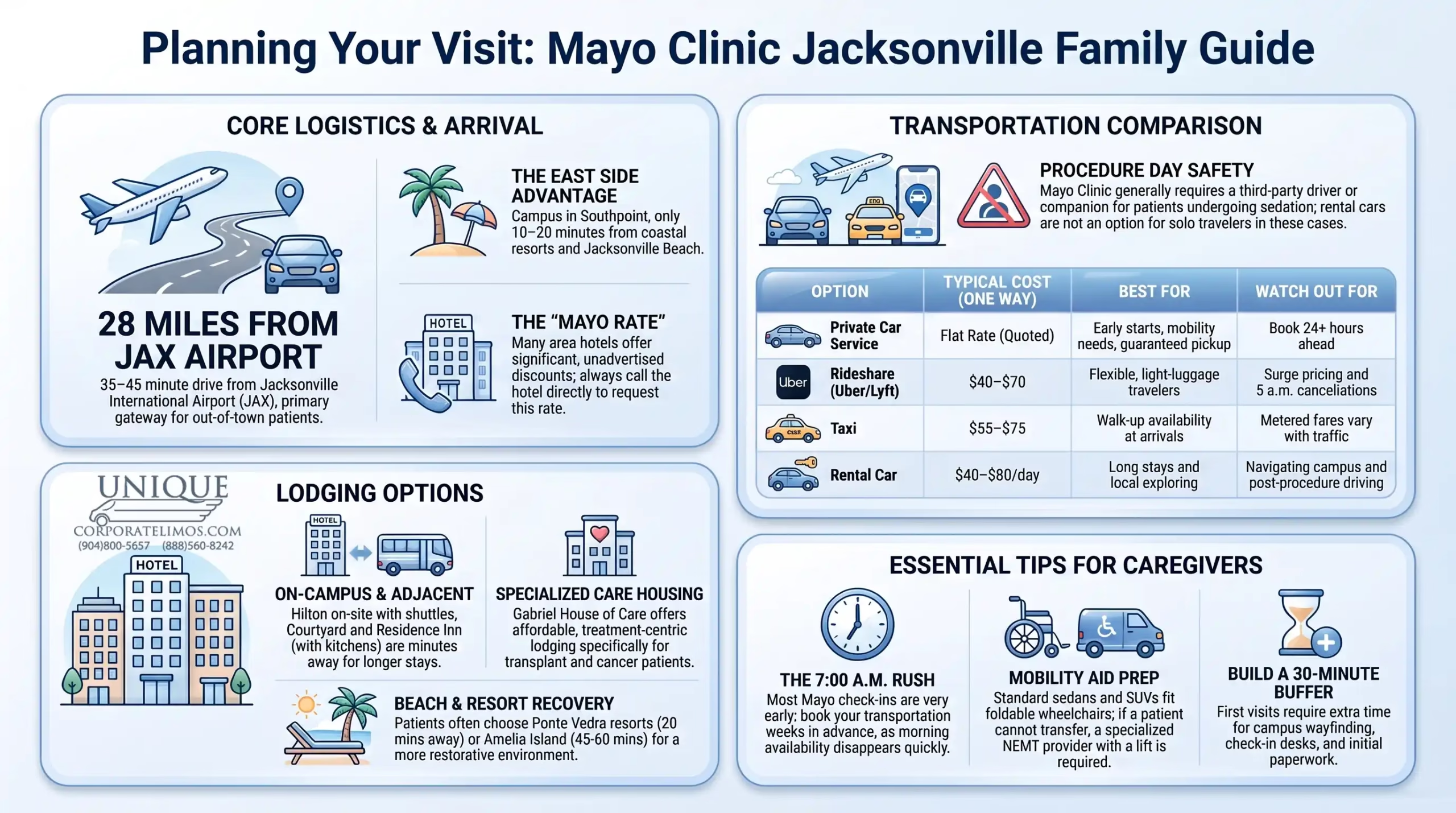
For principals arriving for treatment rather than business, the stakes shift again. See our Mayo Clinic car service and the Mayo Clinic trip planning guide.
When Commercial Collapses and the Charter Call Comes at 9 P.M.
A large share of storm-season private flying isn’t planned private flying. It’s executives whose commercial itinerary fell apart and whose calendar didn’t move.
The sequence is familiar. The airline cancels. Rebooking options are two days out. The company charters. The call goes out at 9 p.m., the departure is early the next morning, and the ground legs on both ends get booked last — usually by an assistant working the phone while everyone else in the region is doing the same thing.
This is where a standing relationship does real work. A provider who already holds the account, the vehicle preferences, the security requirements, and the billing arrangement can confirm in a single message. A provider being introduced during a regional disruption cannot.
Standing accounts and consolidated billing are covered on our corporate executive transportation page.
Pre-Landfall Departures and Regional Repositioning by Road
Sometimes the right answer is that the principal drives out and meets the aircraft somewhere else.
When Northeast Florida ramps are closing but Orlando, Savannah, or Atlanta are still operating, a road leg keeps the trip alive. Orlando is roughly two and a half hours. Savannah is closer. Atlanta is a long day but sits on far more lift than anything in Florida. Groups and family parties move in a Sprinter; principals and small teams in a sedan or executive SUV.
The same logic covers household evacuation. Residents with a home in Ponte Vedra or on Amelia Island frequently need a vehicle to a functioning airport well before general evacuation traffic builds. That call belongs in the first half of the 36-to-60-hour window, not the last.
Routes are detailed on our Jacksonville to Orlando airport car service, long distance car service, and Savannah pages. Larger parties move on our Sprinter van service.
One limit, stated plainly. We won’t run a long regional leg into deteriorating conditions. A Tuesday drive to MCO ahead of a Thursday landfall is routine. The same drive Thursday morning isn’t, and an operator willing to take that booking is telling you something about how it treats its chauffeurs.
What Tail-Number Dispatch Actually Does, and What It Doesn’t
Tracking means dispatch watches your actual aircraft or flight, not your scheduled time. If the inbound slips three hours, the chauffeur is retimed. If you divert, dispatch knows before you’ve reached the jet bridge or the ramp door.
Through storm season that matters more than usual, because booked times and real times stop matching for days at a stretch.
But a promise that breaks in a crisis is worse than no promise, so here are the limits. Tracking retimes a ride. It doesn’t create one. If sustained winds close the Dames Point or Buckman bridges, if I-95 floods, or if authorities order an evacuation, no operator in Jacksonville is driving. Anyone guaranteeing service through a hurricane warning is either misinformed or willing to put a driver at risk.
What tracking genuinely protects is the overwhelming majority of storm-season disruption: the delay, the diversion, the field change, the 2 a.m. rebooked arrival. That’s where trips are actually lost.
What to Require From a Ground Provider Before Storm Season
Ask these in August, not during a watch.
- Tail-number or flight-number dispatch. Aircraft monitored, or a clock time held?
- Named-storm policy in writing. When do they stop dispatching, and what happens to a deposit?
- Field flexibility. Can the destination FBO or terminal change inside a few hours without penalty?
- A direct line to dispatch. Not a booking form.
- Fleet depth. Backup vehicles and chauffeurs when one gets stuck.
- Account billing. Direct billing, so nobody enters a card at 11 p.m.
Our standard terms are on the cancellation policy page, and what’s included in a quote is broken down in our guide to JAX airport car service pricing.
The providers who answer these clearly are the ones who’ve worked a storm before.
A 60-Hour Playbook
Work backward from landfall, and move earlier than feels necessary.
- 60 hours out
Confirm the operator’s repositioning plan and get the revised departure. Check whether your airline has issued a weather waiver — most publish them ahead of named storms, allowing free date changes. Hand the tail number or flight number to your ground provider and flag the trip as at-risk. Identify a fallback field. - 36 hours out
Hangar space is committed by now and commercial seats are thinning. Lock the departure. If anyone is leaving separately by road, that vehicle gets booked at this point, not later. - 24 hours out
Carriers cancel in bulk at this stage. Watch the specific aircraft rather than the departure board. Confirm the arriving field and FBO, verify after-hours access, and get the chauffeur’s direct number to the principal or assistant. - Landfall window
Nobody is driving. Confirm that with your provider rather than assuming either way.
After the Storm: Re-Entry Is Its Own Event
The days following a storm are frequently harder than the storm itself for anyone trying to move.
Rebooked commercial arrivals cluster at odd hours and land in waves. First flights back into the region are heavily contested. Ramp access may be restricted while FBOs assess damage and restore power. Road conditions vary block by block, and traffic signals can be out across whole corridors for days.
Pre-book the return leg instead of assuming availability. This is the point in the cycle where a confirmed, reserved vehicle is worth the most and where improvised arrangements fail most often.
Set Up Coverage Before the Next System Forms
If you run a flight department, manage travel for a principal, or fly into Northeast Florida through storm season, open an account now rather than during a watch. We’ll give you our dispatch line, our named-storm policy in writing, and a straight answer on what we will and won’t do.
Frequently Asked Questions
Does Jacksonville International Airport close during hurricanes?
Rarely. JAX stayed open through Hurricane Helene in 2024 while flights were cancelled and delayed, and remained operational during Milton. The airport usually keeps running while individual airlines cancel. Check status with your airline directly rather than assuming an open airport means a working schedule.
What happens if my aircraft diverts to a different Jacksonville-area FBO?
Give your ground provider the tail number rather than the airport code. Dispatch monitoring the aircraft can redirect to Craig, Cecil, St. Augustine, or Fernandina without a new booking. Drive times vary meaningfully between fields — Amelia Island is about 15 minutes from KFHB and about 35 from KJAX — so notify as early as the crew knows.
Do private jets get grounded during Florida hurricane season?
They’re relocated rather than grounded. Owners compete with airlines and flight schools for hangar space as a storm approaches, and timing is the constraint. Expect departures to move earlier than planned, and return legs to arrive at a different field than they left from.
How much warning is there before a Florida storm?
Roughly 36 to 60 hours, based on a review of 22 years of Florida hurricane data (CNN, August 2026). That window has to absorb aircraft repositioning, hangar allocation, crew planning, commercial rebooking, and ground logistics at once. Decisions made in its first half hold up.
Can you move a principal to Orlando, Savannah, or Atlanta if regional lift disappears?
Yes, when conditions allow. Orlando is roughly two and a half hours from Jacksonville and often retains capacity when Northeast Florida doesn’t. See our long distance car service page. These legs run ahead of deteriorating conditions, never into them.
The Short Version
Hurricane season in Northeast Florida doesn’t usually cancel trips. It relocates them — earlier, and to a different field or city than the itinerary says.
Protecting a trip through September and October comes down to a handful of unglamorous habits. Hand over the tail number or flight number instead of a clock time. Set up the account before the season, so a 9 p.m. charter pivot takes one message. Get the named-storm policy in writing, and be skeptical of anyone who claims a storm won’t affect them at all. Work the first half of the 36-to-60-hour window rather than the last. And pre-book the return leg, because re-entry is where improvised plans fail.
Next: our field-by-field FBO guide for where your aircraft may actually end up, or the JAX delay and cancellation playbook for the commercial side.
Sources
- CNN, “Want to be first to escape a hurricane? This new company is selling seats on private planes,” retrieved 2026-08-28. Link
- NOAA, “NOAA maintains prediction for below-normal Atlantic hurricane season,” retrieved 2026-08-28. Link
- Air Charter Advisors, “Hurricane Season & Private Aviation,” retrieved 2026-08-28. Link
- EmptyLegs, “How Hurricanes Impact Private Jets,” retrieved 2026-08-28. Link
- First Coast News, “Everything to know about Jacksonville airport delays and cancellations,” retrieved 2026-08-28. Link
- First Coast News, “Here’s the status of Jacksonville International Airport flights as Milton lingers,” retrieved 2026-08-28. Link
- JaxReady (City of Jacksonville), “Hurricanes and Tropical Storms,” retrieved 2026-08-28. Link
- The Points Guy, “JetBlue Florida evacuation,” retrieved 2026-08-28. Link